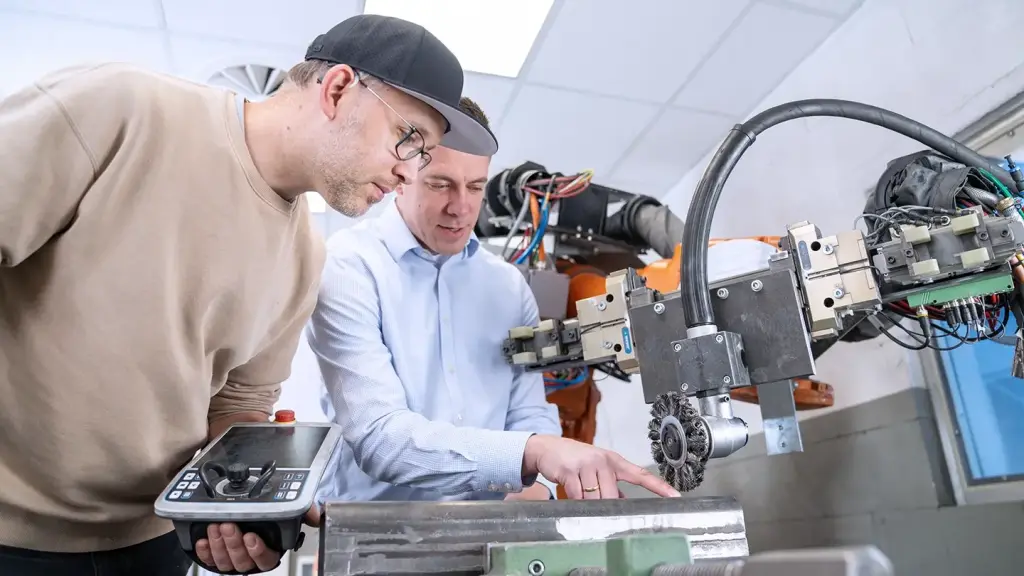
Whether it’s tool preparation, the coating stage or the post-treatment of the layer, we don’t leave anything to chance. Each individual process step is designed to provide the best possible tool solution for your machining processes.
Tool preparation
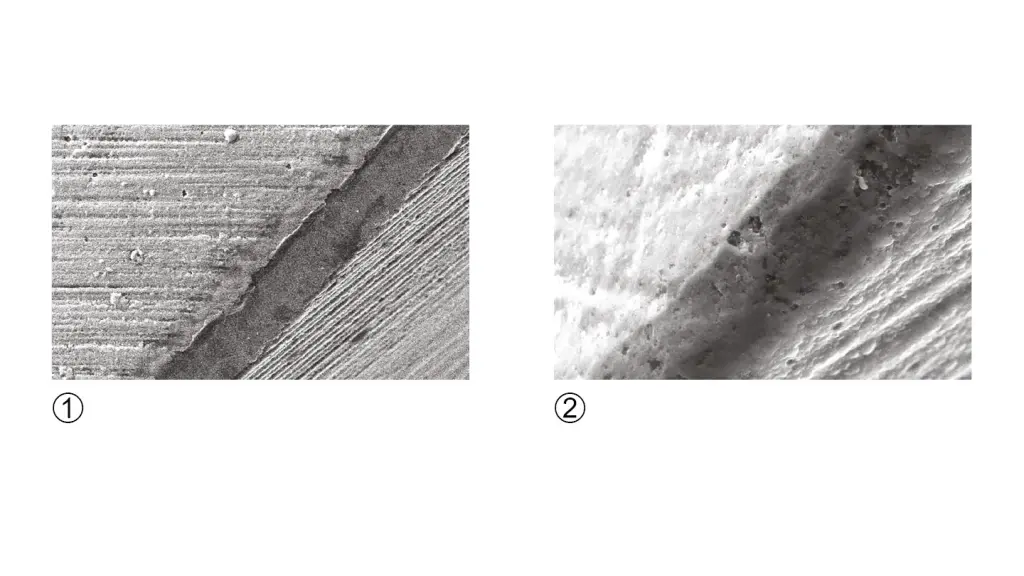
The microgeometry of a machining tool (i.e. the contour of the cutting edge) plays a key role in its performance.
Tools with a positive rake angle and sharp cutting edges have excellent cutting properties, but this also means the cutting edges are less sturdy. A less sturdy cutting edge is very susceptible to parts breaking off, which would result in a poor-quality workpiece surface and in the tool life being reached prematurely.
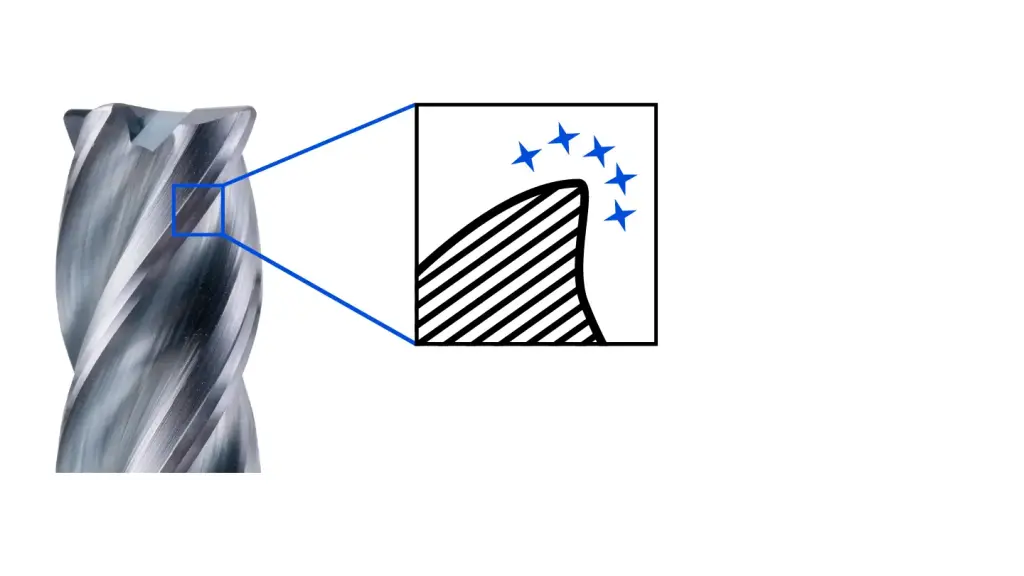
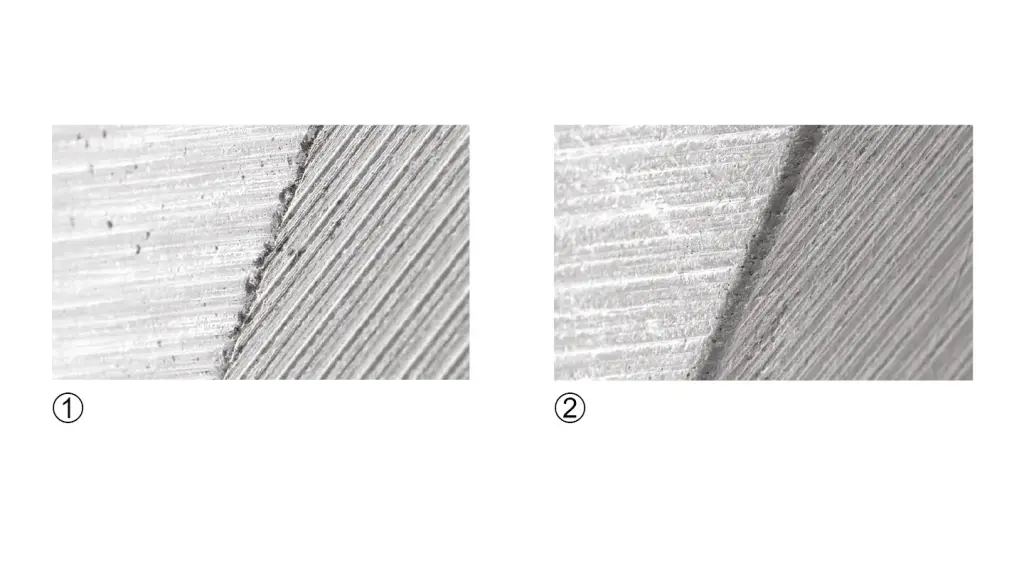
Defined rounded cutting edges ensure:
- Improved coating adhesion.
- A sturdier cutting edge.
- Much longer tool life and higher tool productivity.
1) Non-rounded cutting edge.
2) Defined rounded cutting edge.
Coating and layer post-treatment
Coatings prevent direct contact between the material being machined and the blade material, which reduces wear caused by adhesion, abrasion, diffusion or oxidation.
One of the best-known coating methods used for machining tools is PVD (Physical Vapour Deposition), which is when a solid metallic material (target) is vaporized in a vacuum.
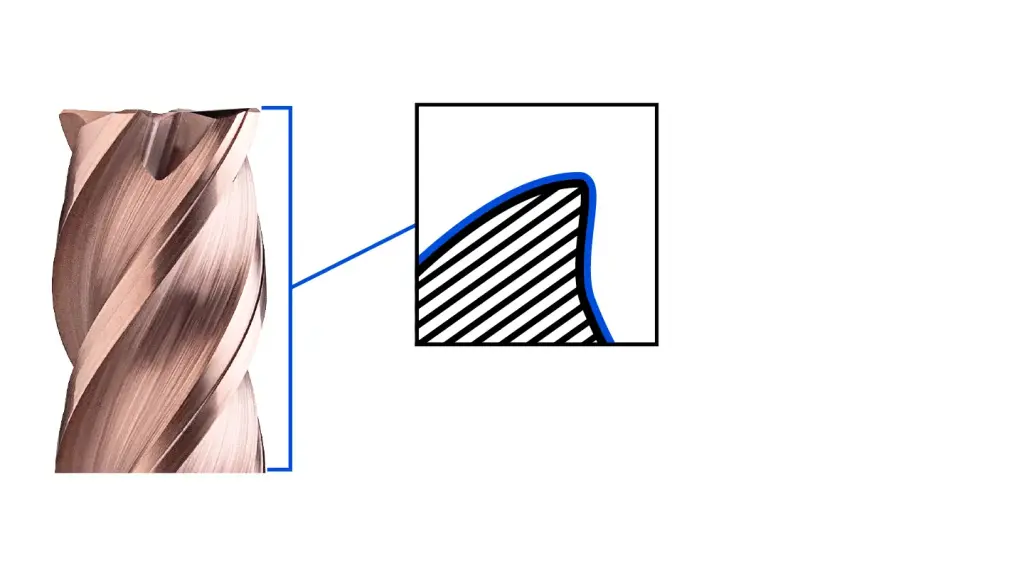
In many cases the actual coating is formed by the additional use of a reactive gas. The vaporous coating material ultimately condenses on the substrate as a thin layer, creating the tool coating.
A particularly widespread PVD technology used in industrial applications is cathodic arc deposition (or Arc-PVD for short), which offers a very high deposition rate.
1) Coating on an untreated tool surface.
2) Coating on a pretreated tool surface.
Smoothing
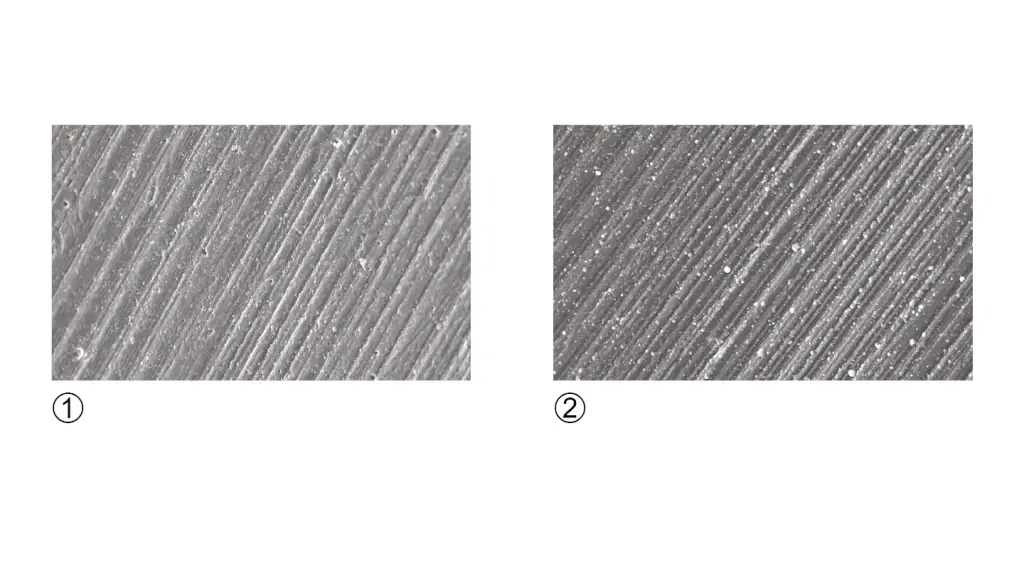
During Arc-PVD, the target material is vaporized at the cathode spot of an electric arc by the high energy density. However, this process forms molten particles (droplets) which are deposited on the substrate and leave behind microscopic imperfections.
We use special post-treatment processes to smooth out these and similar rough areas on the surface, which reduces friction and extends the tool life.
1) Tool surface with droplets.
2) Tool surface without droplets.
Polish grinding
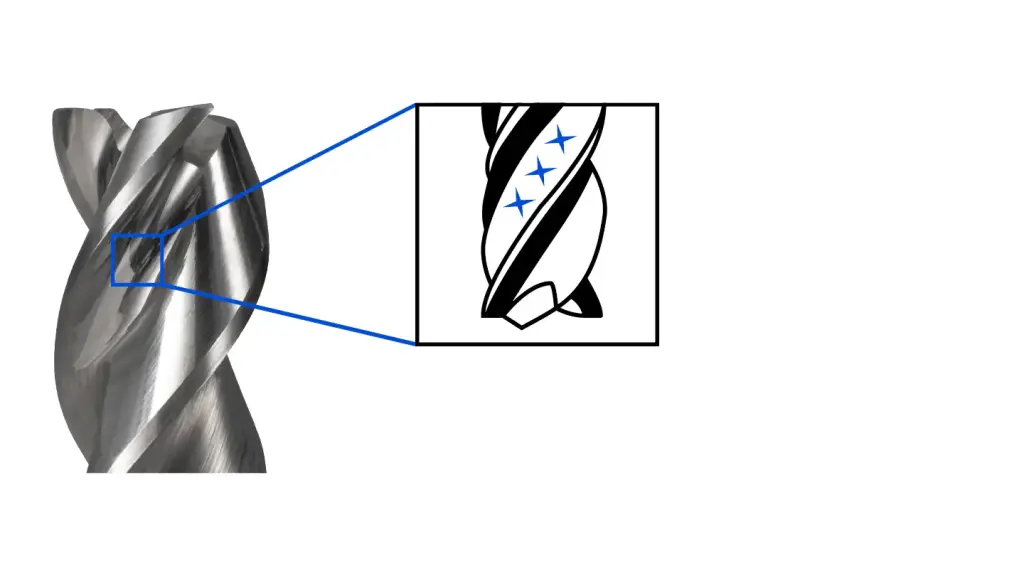
By optimizing the chip spaces for specific materials, we ensure controlled chip evacuation and that the tool does not clog up.
Polished chip spaces have a very smooth surface for optimized chip evacuation when machining non-ferrous metals with a high volume of chips.